ONLINE APPLICATION
 SMU
 RECEIPT
 DIPLOMA
 Anti-Plagiarism System
 Library
 Webmail
 Contact

The Iceberg Theory: Literary interpretation and its relevance to translation and interpretation
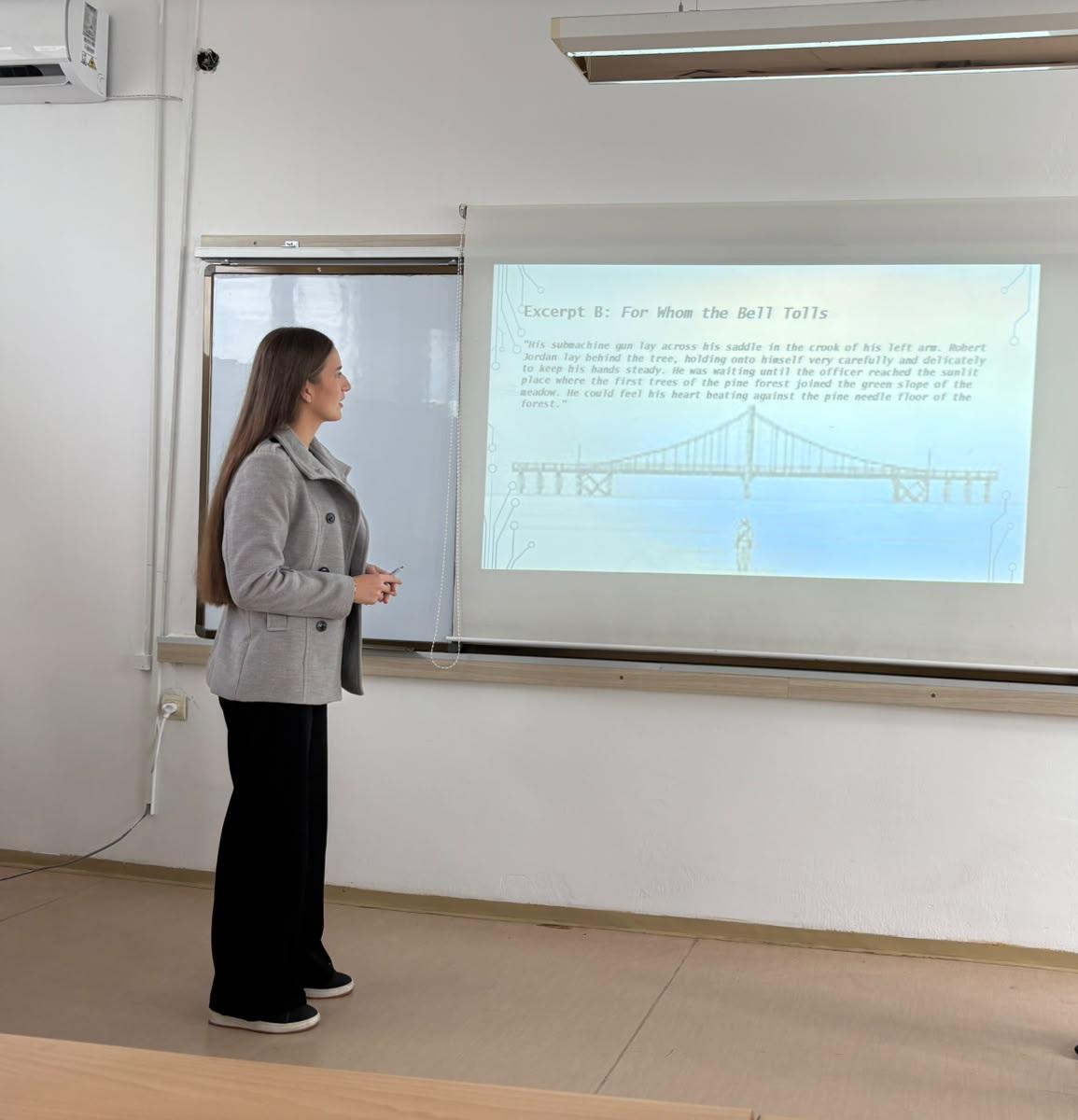
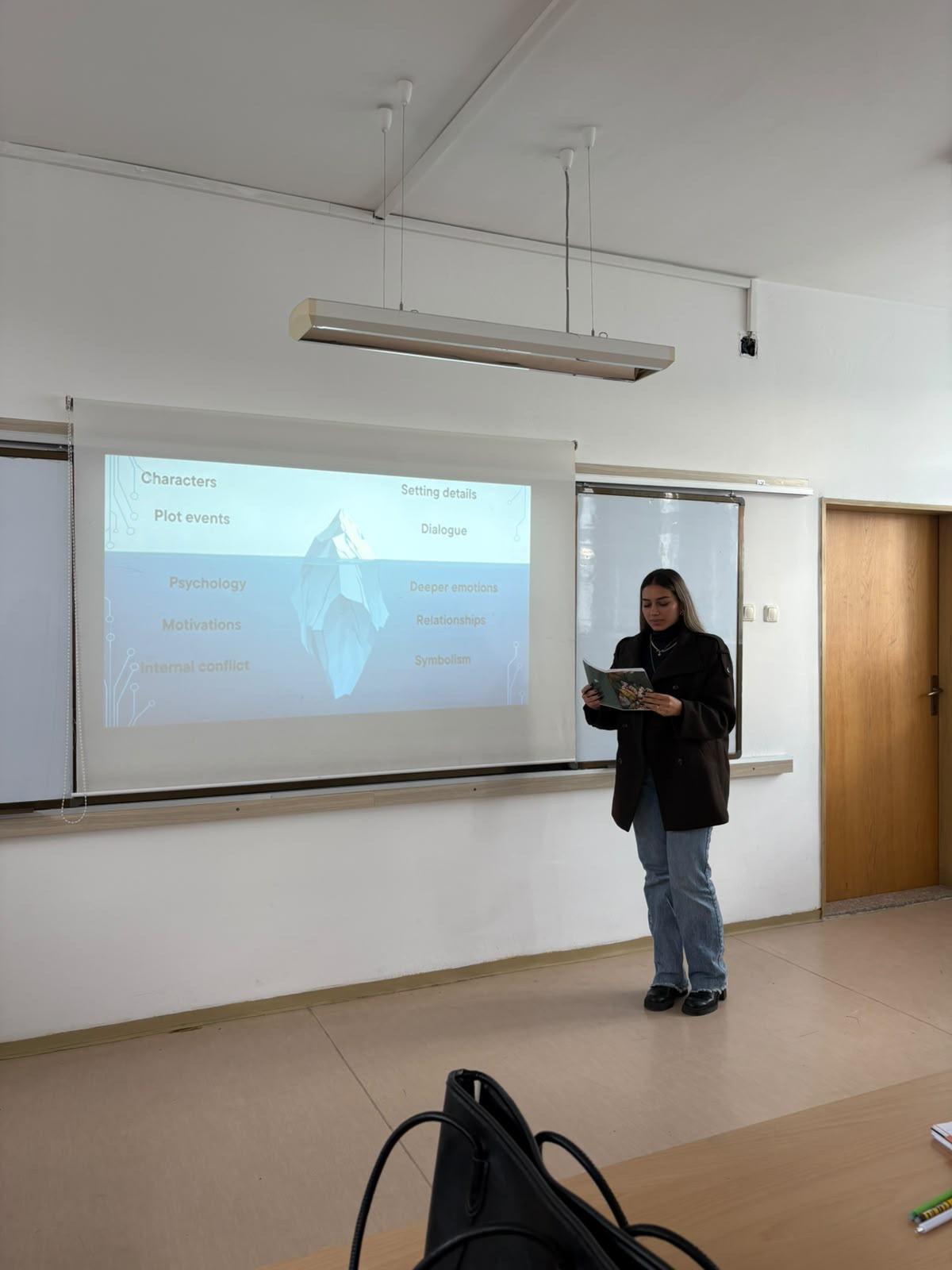
This week, under the guidance and supervision of PhD.C. Hana Qurdina, third-year students of the English Language – Translation and Interpretation programme explored Ernest Hemingway’s Iceberg Theory as part of the Reading and Interpretation course.
Also known as the Theory of Omission, this literary approach is based on the idea that the power of a narrative lies not in what is explicitly stated, but often in what is deliberately left unsaid. Much like an iceberg, whose greater mass is beneath the surface, Hemingway’s writing often conceals its deeper meaning behind seemingly simple dialogue, silences, and character actions, inviting readers to interpret and reconstruct what lies beneath the text.
In this context, students examined how Hemingway employs this technique in his novel "For Whom the Bell Tolls," exploring how restrained language, understated dialogue, and carefully selected descriptions convey the moral conflicts, human dilemmas, and emotional tensions of the Spanish Civil War.
For students of Translation and Interpretation, understanding this technique has particular professional importance. Translation is not just the transfer of words from one language into another; it requires the ability to recognize subtext, emotional nuances, communicative intentions, and cultural context. Through this approach, students develop the ability to read between the lines and preserve not only the explicit meaning but also the underlying message of the original text.
This awareness is equally valuable in interpreting, where sensitivity to silence, intonation, speech rhythm, and subtle changes in communication can reveal emotions and meanings that are not directly expressed. These skills are essential for accurate and context-sensitive consecutive and simultaneous interpreting.
Another important aspect of Hemingway’s theory is linguistic economy. His minimalist style demonstrates how carefully chosen words and concise sentences can convey profound emotional and intellectual meaning. For future translators and interpreters, this offers an important lesson: effective communication is not about saying more, but about conveying what matters most.
Through this academic activity, students not only explored one of the defining features of Hemingway’s literary style but also reflected on the importance of interpreting implicit meaning in intercultural and multilingual communication. Understanding a text means not only reading what is written, but also recognizing what the author has deliberately chosen to leave unsaid.




.jpg)


.png)